Photo Story
Budapest A City Best Explored Without a Plan
My wife and I spent three days exploring Hungary’s magnificent capital, and despite walking nearly 60,000 steps, we each returned home slightly heavier than when we arrived. The explanation is simple: Budapest is a city filled with irresistible cafés, welcoming restaurants, and bakeries that seem to appear around every corner.
We stayed at the VOCO Budapest D8 by IHG – Stylish Hotel in Budapest City Centre in the heart of the city, a perfect base for exploring on foot. While Budapest offers countless famous attractions, many of our favorite moments came from something much simpler. Most mornings we left the hotel with no destination in mind. We simply walked.
And Budapest rewarded that approach.
Unlike many large European capitals, Budapest feels remarkably walkable. Wide boulevards connect lively squares. Historic neighborhoods blend naturally into commercial districts. Elegant architecture turns even an ordinary stroll into a sightseeing experience.
Some of our most memorable discoveries happened entirely by accident.
On our first morning we found ourselves standing before the Dohány Street Synagogue, the largest synagogue in Europe. What began as another turn down an unfamiliar street unexpectedly became one of the highlights of our trip.
Stepping inside was breathtaking.
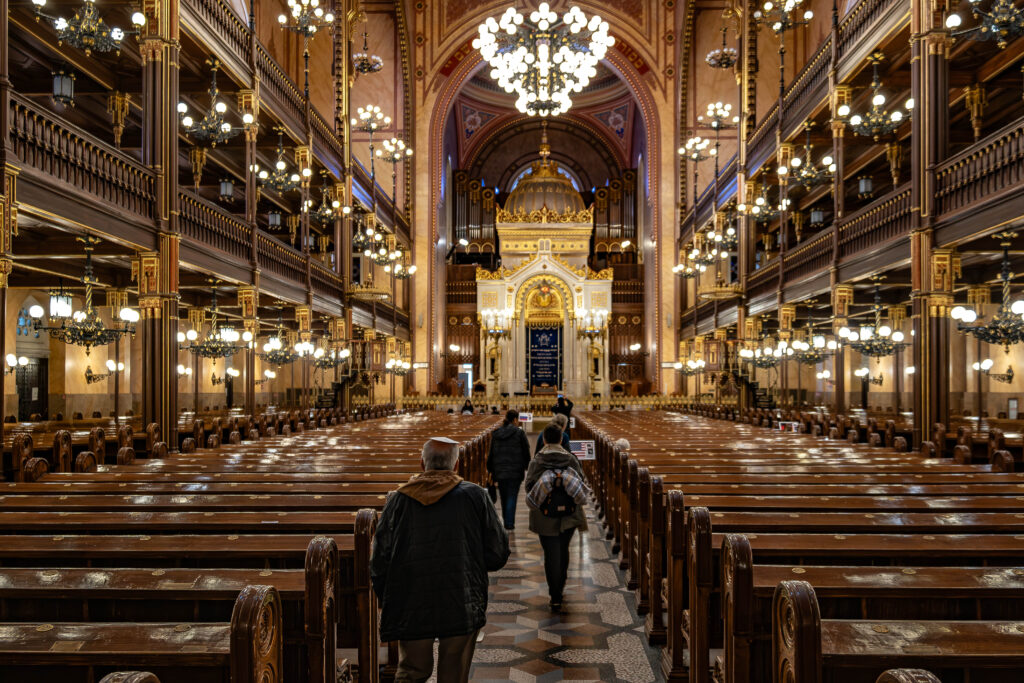
Rows of polished wooden pews lead toward an ornate sanctuary illuminated by magnificent chandeliers and intricate decorative details. The scale of the interior immediately commands attention, but it is the history of the place that leaves the deepest impression.
The synagogue stands as both a symbol of Budapest’s rich Jewish heritage and a reminder of the tragedies endured during the twentieth century. It is one of those places where architecture, history, and human experience converge into something far greater than a tourist attraction.
A similar surprise awaited us when we discovered St. Stephen’s Basilica.
The immense church dominates the surrounding district, drawing visitors toward its massive dome. Naturally, we joined them.
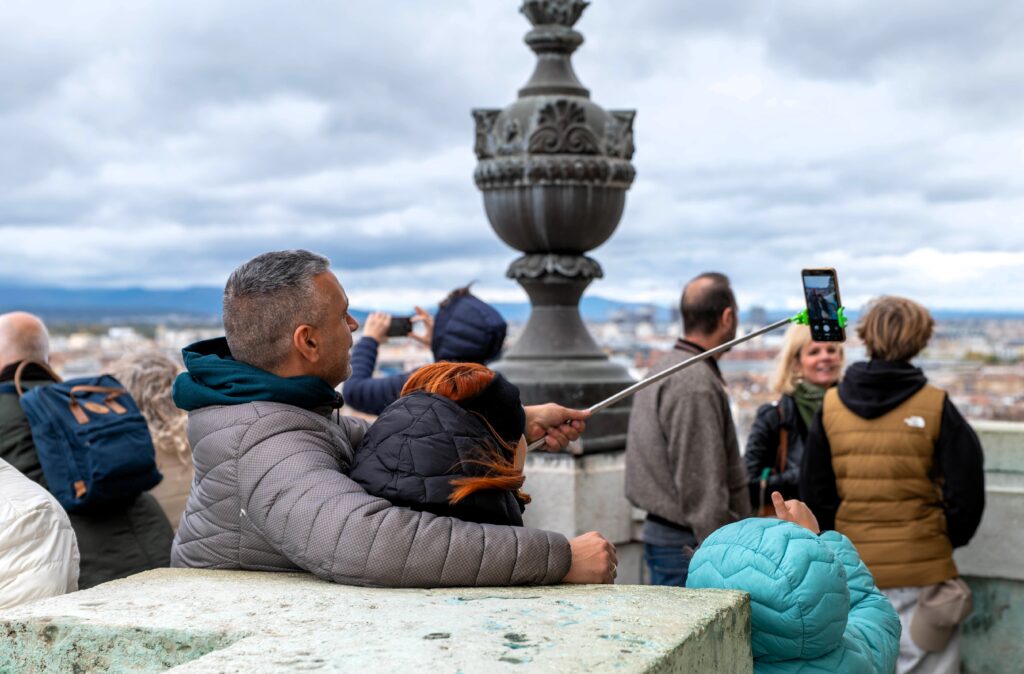
You can of course take the steps BUT for us we chose the elevator.
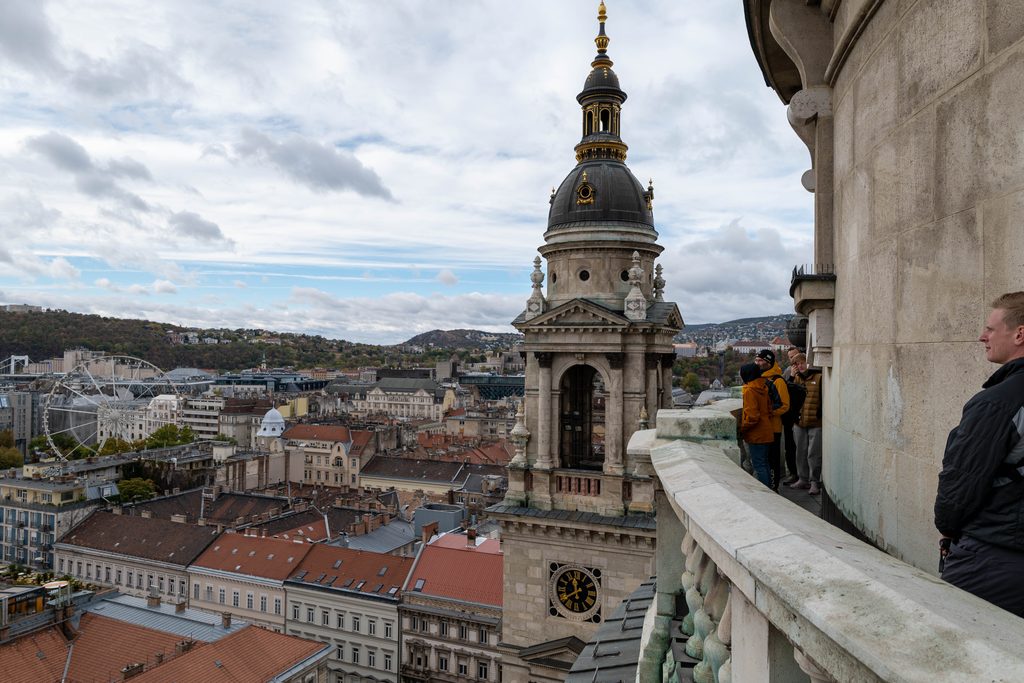
Standing high above Budapest, we enjoyed sweeping views across the city. The Danube wound its way through the urban landscape while church spires, government buildings, bridges, and rooftops stretched toward the horizon. Looking out across the city provided a perspective impossible to appreciate from street level.
Budapest reveals itself differently from above.
Yet the city’s magic is not confined to its landmarks.
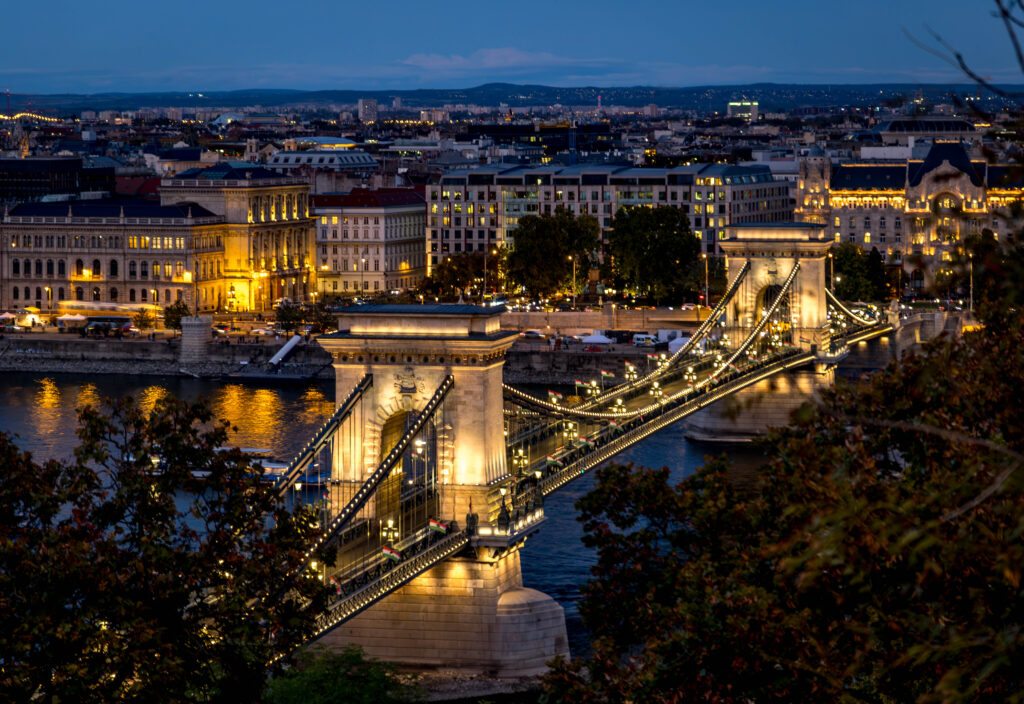
Some of my favorite photographs came from simple moments along the river. A yellow tram rattling beside the Danube as dusk settled over the city.
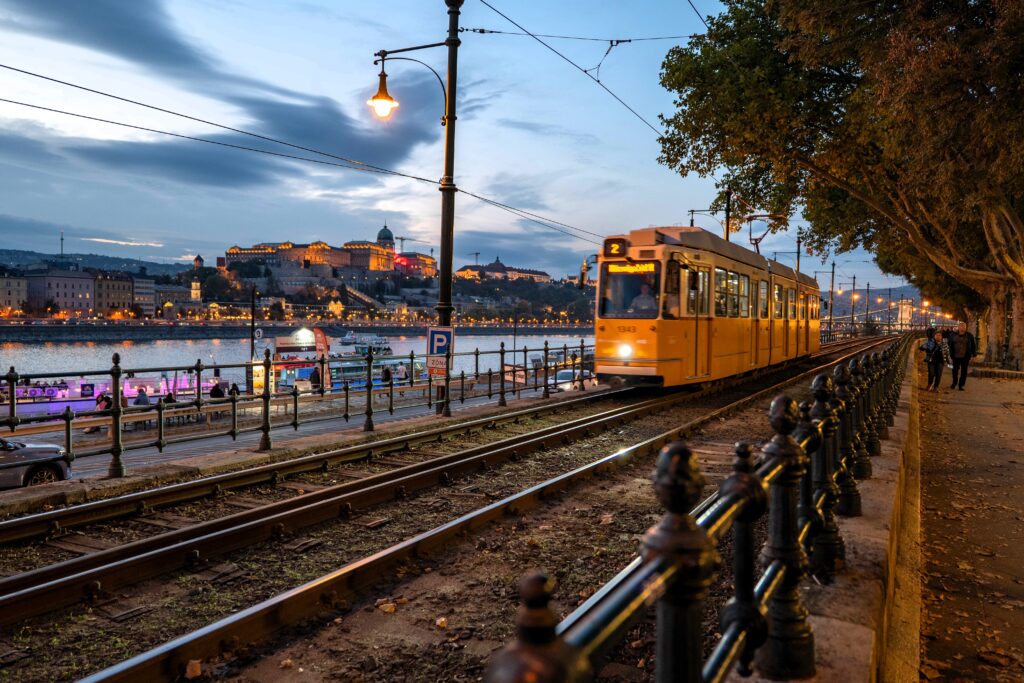
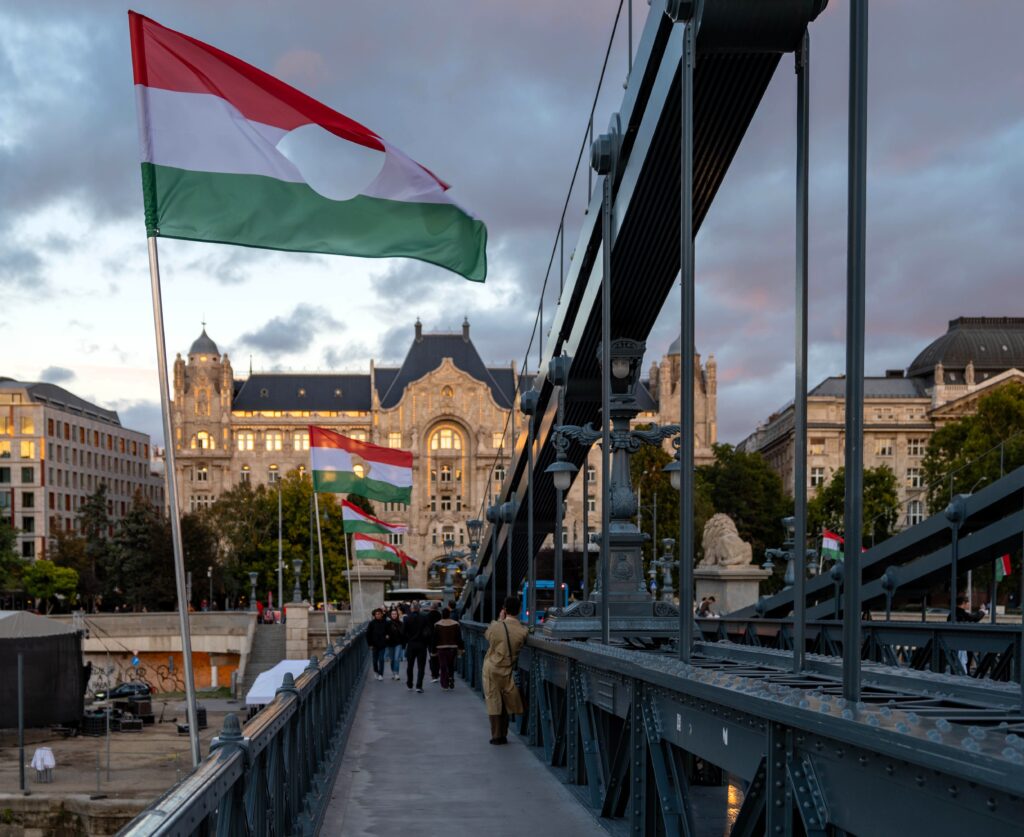
Hungarian flags fluttering along a bridge. Locals gathering on the waterfront. Vendors selling souvenirs while riverboats drifted past illuminated buildings. One of our favorite surprises was an evening boat trip down the Danube…..Magical!!
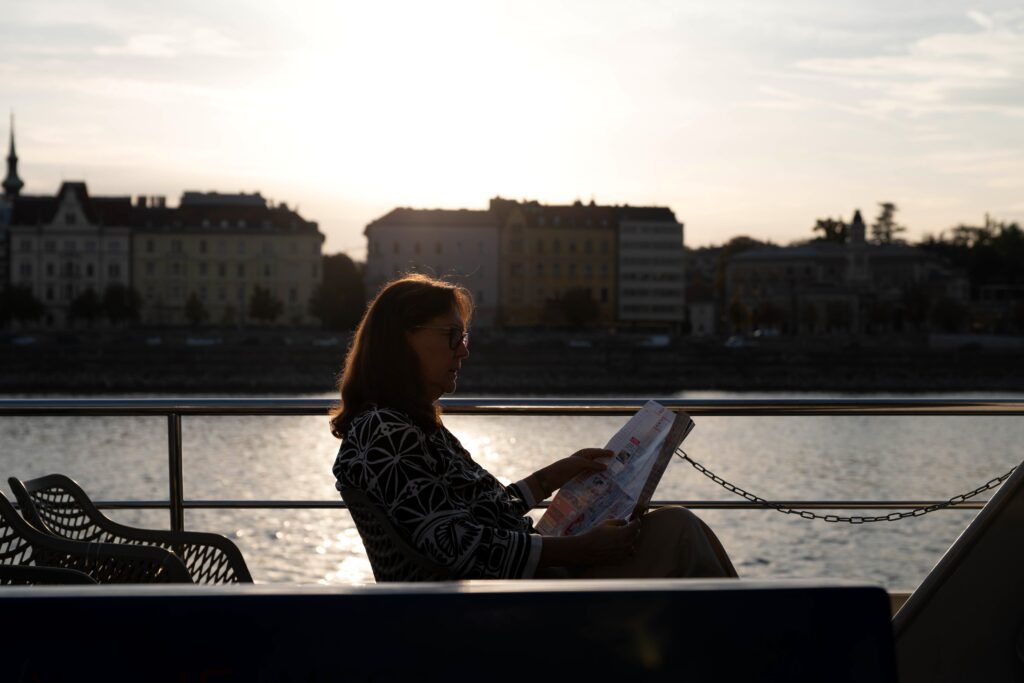
Everywhere we went, Budapest seemed connected to its history.
The Hungarian flags displayed with a circular opening cut into the center particularly caught my attention. They commemorate the 1956 Hungarian Revolution, when protesters removed the Communist coat of arms from the national flag during their uprising against Soviet control. Decades later, the symbol remains a visible reminder of resilience and national identity.
History feels alive here.
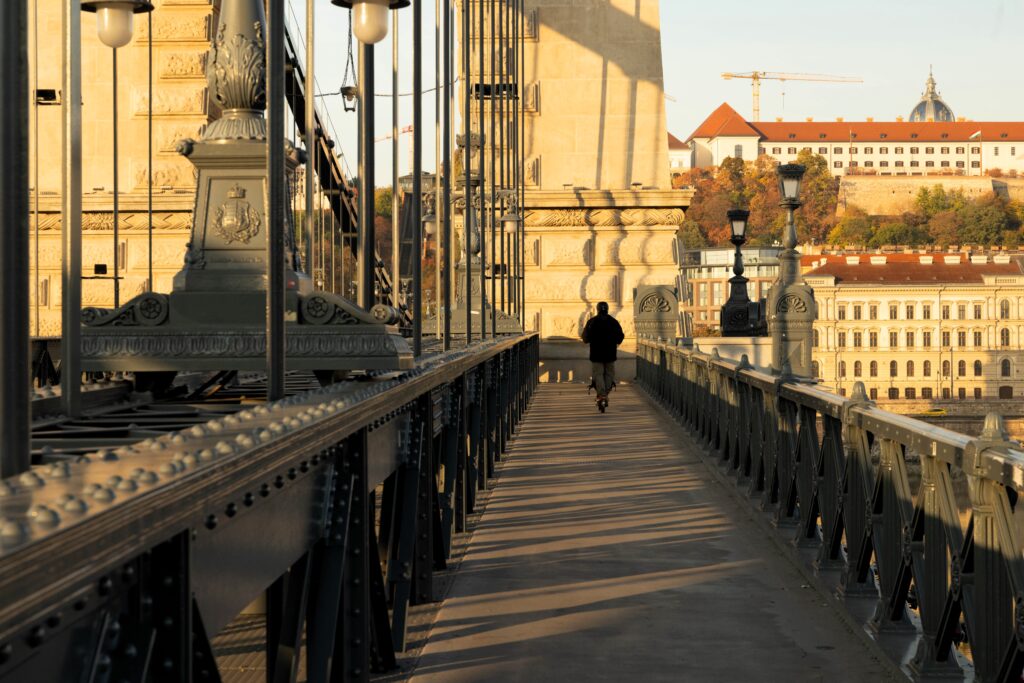
It is visible in the Parliament Building reflected in the Danube. It is present in the grandeur of St. Stephen’s Basilica. It echoes through the halls of the Dohány Street Synagogue and can be felt while crossing the city’s historic bridges.
Yet Budapest never feels trapped by its past.
The city is vibrant and energetic. Cafés spill onto sidewalks. Markets bustle with activity. Riverfront promenades fill with walkers and cyclists. The old and the new coexist comfortably, creating a destination that feels both deeply historic and unmistakably contemporary.
And then there is the food.
Perhaps the clearest evidence of Budapest’s culinary appeal is this simple statistic: sixty thousand steps and one kilogram gained.
Each day seemed to include another unexpected café, another bakery window too tempting to ignore, or another restaurant serving traditional Hungarian dishes that demanded experimentation. Any weight gained was earned honestly and enjoyed thoroughly.
Looking back, what made Budapest unforgettable was not any single landmark.
It was the freedom to wander.
It was leaving the hotel without a plan and allowing curiosity to guide the day. It was discovering extraordinary places by chance. It was finding history where we least expected it. It was watching life unfold beside the Danube while realizing that some of the best travel experiences cannot be scheduled.
Budapest is a city of grand buildings, dramatic history, and remarkable views.
But perhaps its greatest gift is that it rewards those willing to simply walk out the door and see where the day leads.