
Photo Story
Searching for the Soul of Frankfurt’s New Terminal 3
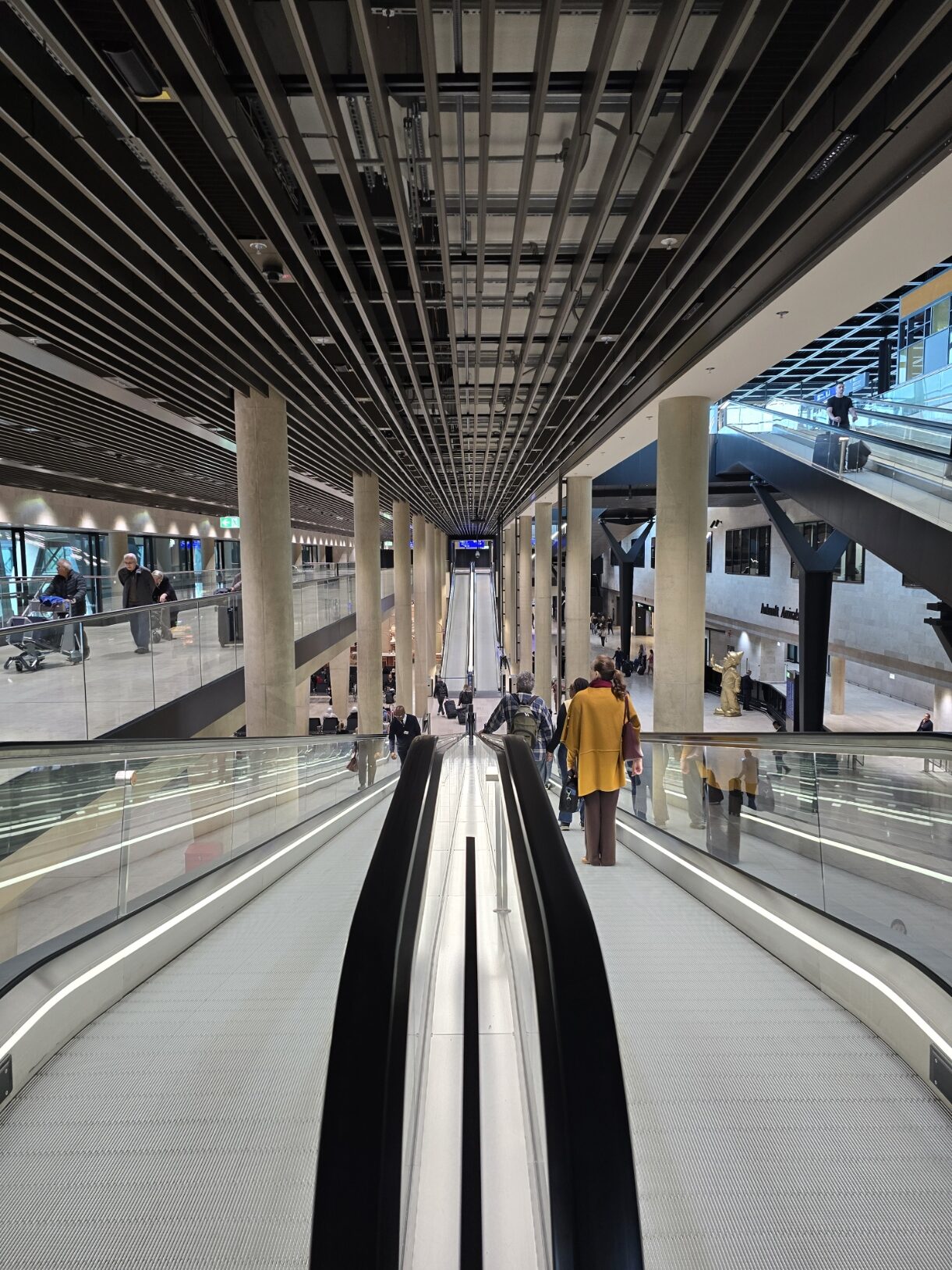
The architecture succeeds in creating beauty through scale and simplicity. Yet as I walked these corridors, I found myself searching for something more elusive: a sense of Frankfurt itself.
The Soul of a Gate: Frankfurt’s Terminal 3 and the Architecture We Left Behind
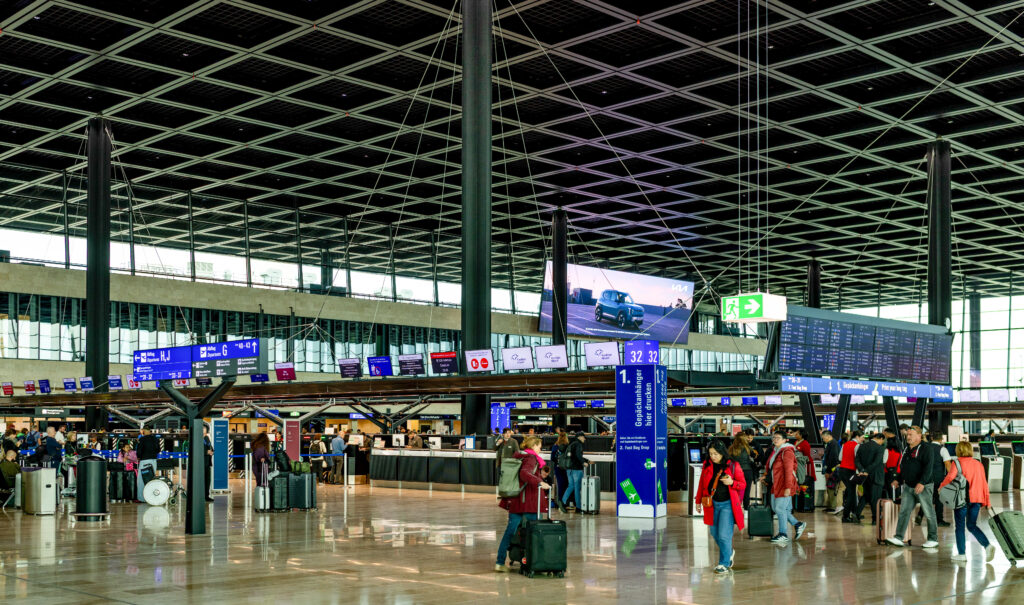
Today, I stood in the sweeping, cavernous expanses of Frankfurt Airport’s brand-new Terminal 3. Visually, it is an undeniable marvel of modern engineering—all soaring glass, polished steel, and optimized passenger flow. Yet, as I walked through the terminal capturing images for this photo story, a persistent, hollow feeling settled in. Looking through the lens, I realized what was missing:
there is no there, there. It is a space designed strictly for transitions, completely devoid of a soul. It made me think back to the early 1980s, when I lived in a basement apartment in San Francisco. My landlord was Meyer (Max) Rodrigues Garcia, a brilliant Dutch-Jewish architect and a Holocaust survivor who had rebuilt his life in the Bay Area. Max was a man of immense passion. When he spoke about his history or his architectural philosophy, he would get so fiercely excited that his wonderful wife, Pat, would gently sigh from across the room, “Now Max, calm down.”
But Max couldn’t calm down about design, because to him, architecture was a testament to being alive. Max was incredibly proud of his vision for San Francisco International Airport (SFO). He understood that an airport shouldn’t just be an efficient processing plant for human cargo. To Max, a gate area wasn’t just a holding pen; it was a stage for life’s most intense emotional thresholds—the tearful goodbyes, the breathless reunions, the nervous anticipation of a new chapter. He believed an airport should feel like an extension of the city itself, filled with natural light, rich textures, and a warmth that grounds an anxious traveler. Walking through Frankfurt’s Terminal 3 today, I saw the ultimate realization of the opposite philosophy: corporate clinicalism.
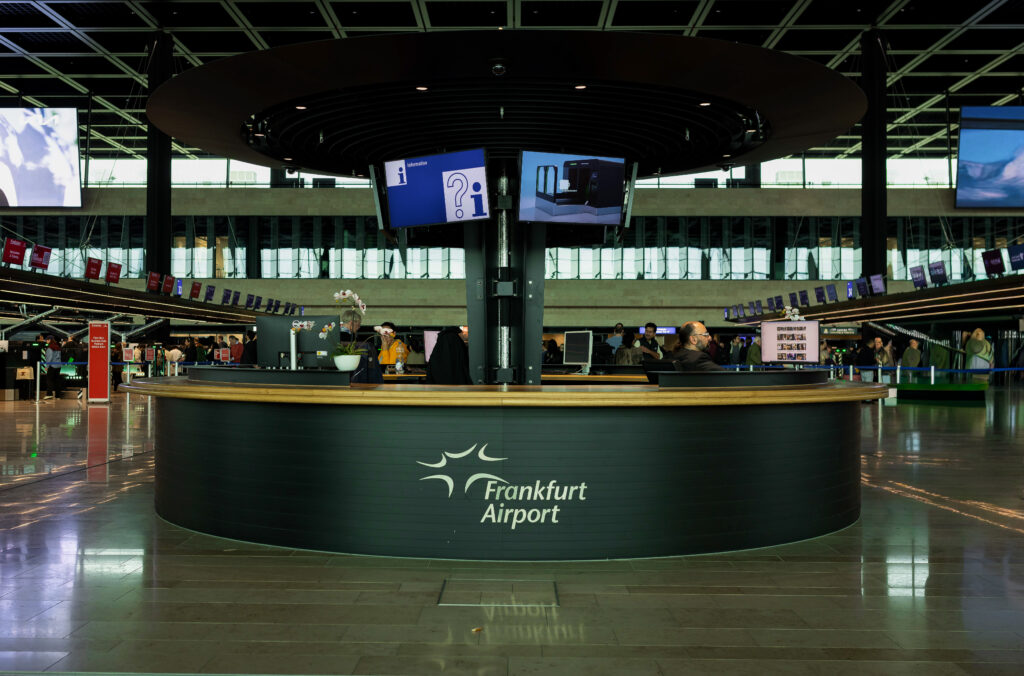
It is a monument to the hyper-efficient, post-9/11 “non-place.” It functions perfectly, but it feels like nowhere. What a missed opportunity. Frankfurt is a city with a deeply unique character—a fascinating intersection of hyper-modern skyscrapers, rich financial history, and hidden pockets of old-world soul along the Main River. Its front door should reflect that distinct identity. Instead, Terminal 3 welcomes visitors with the same sterile, placeless aesthetic you could find in any global hub from Doha to Denver. It completely misses the chance to say,
“You have arrived somewhere special.”
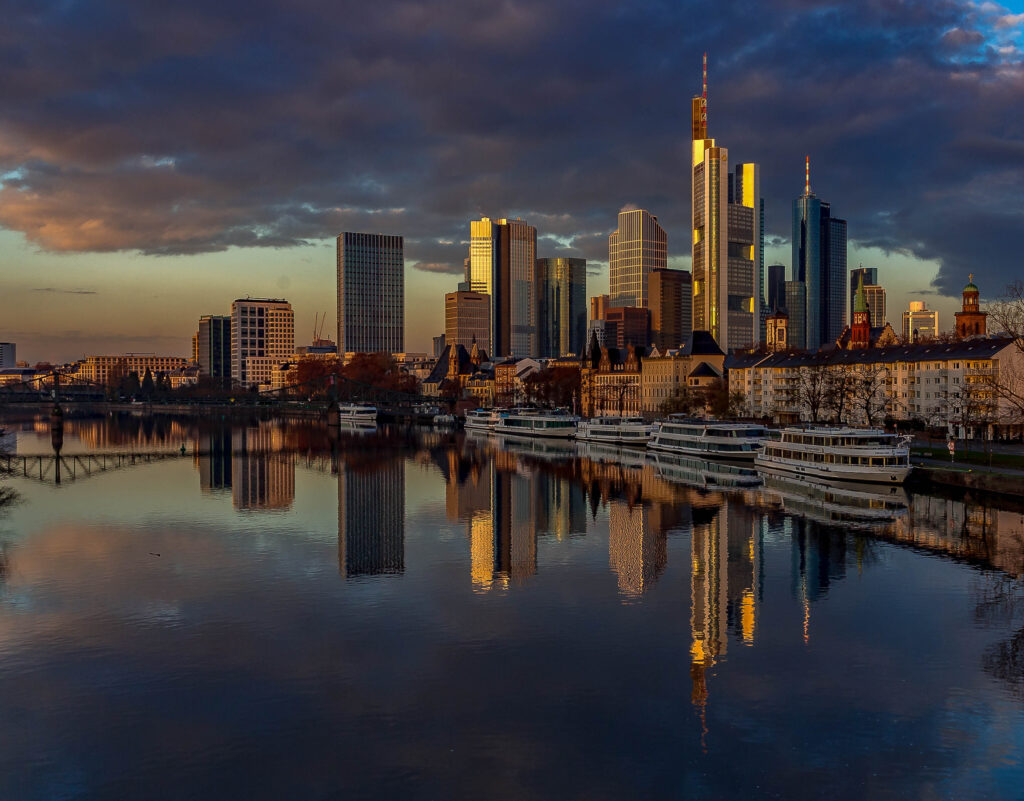
What makes this Frankfurt?
Frankfurt is not just another European city.
It is Germany’s skyline city.
It is where glass towers rise above historic churches.
It is riverfront promenades, world-class museums, financial powerhouses, old taverns in Sachsenhausen, and some of the most dramatic urban photography opportunities in the country.
Frankfurt is contrast.
Frankfurt is identity.
Yet throughout my visit, I struggled to find that identity reflected in the terminal 3.
Imagine stepping off a long-haul flight and seeing:
A visual welcome that says: “You’re not just passing through. You’re arriving somewhere special.”
Large-format photography of the skyline at dusk
Historic Römer imagery
The Main River waterfront
Cultural exhibits from the Museumsufer
Stories about Frankfurt’s role as Europe’s crossroads
The terminal successfully moves people through Frankfurt.
I left wondering whether it introduces them to Frankfurt at all.
Ironically, back in California, SFO has recently been trying to recapture exactly what Max championed, launching programs to bring the public back past security just to enjoy the art, the dining, and the warmth of the space. They are trying to put the “there” back into the terminal.As I finish editing the photos of Frankfurt’s pristine, sterile new gates, I can still hear Pat’s gentle voice guiding Max to ground himself. But looking at these soulless modern halls, I find myself wishing the architects of today had a little bit more of Max’s uncalmed, fierce passion—and a desire to honor the unique spirit of the cities they build for.
What do you think? Has Frankfurt’s new Terminal 3 captured the spirit of the city, or is there still room for the airport’s newest gateway to tell a richer Frankfurt story?